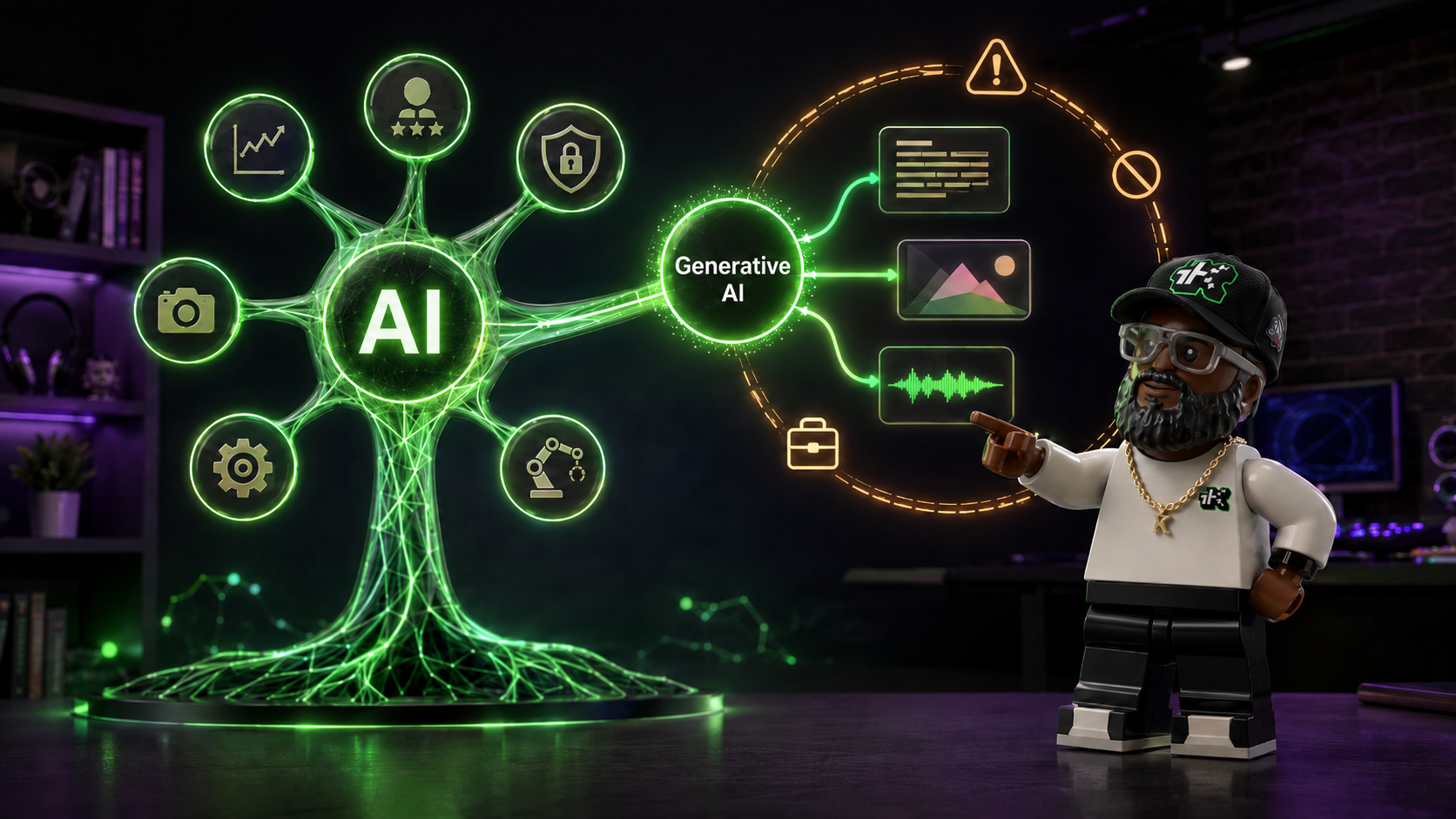

Starting August 2, 2026, Claude embeds a watermark in the text it generates and signed metadata in the files it creates, a machine-readable mark showing a Claude model touched the content. That mark doesn't ask whether the words started as yours.
Say you draft a program report yourself, every sentence, then ask Claude to clean up the formatting before it goes to a funder. The file that comes back can carry that same mark, a signal about handling, not about who came up with the words inside it. That distinction lives in fine print that's easy to skip.
What Anthropic is rolling out
Anthropic signed the EU AI Act's Article 50(2) Code of Practice on Transparency of AI-Generated Content, a rule that requires AI companies to mark what their models generate so people downstream can tell what came from a machine. Claude models launched on or after August 2, 2026 will carry that marking by default, across the API, the Claude app, Claude Code, Cowork, and Claude Tag, everywhere Claude runs, worldwide. Anthropic lays out the plan on its support site.
Two mechanisms do the work. Generated text gets an embedded watermark: a signal encoded into the word choices themselves that a detector can check for later. It's invisible to a reader and, according to Anthropic, doesn't change the meaning or quality of the writing. It travels with the text through copy and paste and can survive some editing.
Generated files get signed provenance metadata instead, a record attached to the file itself that says what tool touched it and when. Claude's version follows C2PA, the Coalition for Content Provenance and Authenticity, a standard Adobe, Microsoft, the BBC, Intel, Arm, and Truepic built in 2021 so a PNG, PDF, or video could carry a tamper-evident history of what created and changed it.
The mark tracks the output, not who had the idea
Here's where the read-or-format question lands. Anthropic's own documentation names it directly: "Claude may not be the original author. People often use Claude to proofread, translate, summarize, or convert files. The output can carry a Claude mark even if the underlying ideas, text, or data originated from another source."
That's the case for anyone who writes their own material and only asks Claude to clean it up, translate it, or turn it into a PDF. The mark isn't checking whether the sentence came from your head. It's checking whether Claude generated the specific text or file sitting in front of you right now, the same output-versus-origin question covered in what makes something "generative" in the first place. Ask Claude to reformat a paragraph you wrote, and the paragraph that comes back is new output, even if every idea in it is still entirely yours.
Why Anthropic being upfront about this doesn't settle it
Anthropic's honesty about this limitation only covers Anthropic's own detection tools, which aren't public yet. It says nothing about the tools already making this call for people right now, and those tools have a track record worth knowing about, the same trust gap explored in the fake stuff used to look fake.
In late 2023, a University of North Georgia student named Marley Stevens used the free version of Grammarly to proofread a two-page criminal justice paper. Turnitin flagged nearly the whole thing as AI-generated. Her professor gave her a zero and reported her for academic dishonesty, and the university later put her on probation, as the New York Post reported in February 2024. Grammarly told the Post its grammar and spelling suggestions aren't powered by generative AI, and that some detectors flag its use anyway.
Author ReShonda Tate ran chapters of her own book, Miss Pearly's Girls, through a popular AI detector out of curiosity. It came back 92 percent AI-generated, even though she wrote the book by hand in 2020, years before ChatGPT existed, as she later wrote about the experience.
Neither of those detectors works anything like what Anthropic built. They guess at statistical patterns; Anthropic's mark is a deliberate, embedded signal. But that's exactly the point worth sitting with: the tools already deciding this question elsewhere treat "AI touched this" as interchangeable with "AI wrote this." A footnote in Anthropic's documentation doesn't reach the professor, the editor, or the automated screening tool making that call on the other end.
What this means if you use Claude to edit, not write
A few things are worth carrying into how you use Claude if drafting isn't the job you're handing it.
- A mark on your file doesn't mean the writing wasn't yours. It means Claude's output touched it somewhere along the way, and that happens with a translation, a reformat, a proofread, or a file conversion just as often as it does with a first draft.
- No mark doesn't prove the opposite either. Anthropic lists its own gaps: models from before marking existed, text that's been heavily edited or paraphrased, passages too short to carry a reliable signal, and files whose metadata gets stripped by a screenshot, a re-save, or a format conversion.
- Keep your own paper trail. A version history, a saved draft, an earlier timestamp, anything that shows the work existed before Claude touched it, matters more than the mark itself for now, especially while detection tools for Anthropic's own mark are still unreleased.
- Ask before you assume. If a class, a publisher, or a client has a policy on AI use, find out whether "used it to format a PDF" counts the same as "used it to write the thing." Right now, the mark alone won't make that argument for you.
A mark that admits its own blind spots is still ahead of the detectors already making this call for people, the ones running with no disclaimer at all. It doesn't reach far enough on its own to answer the question a professor, an editor, or a client keeps asking anyway: what does "AI touched this" tell you about who wrote it. For now, not much.