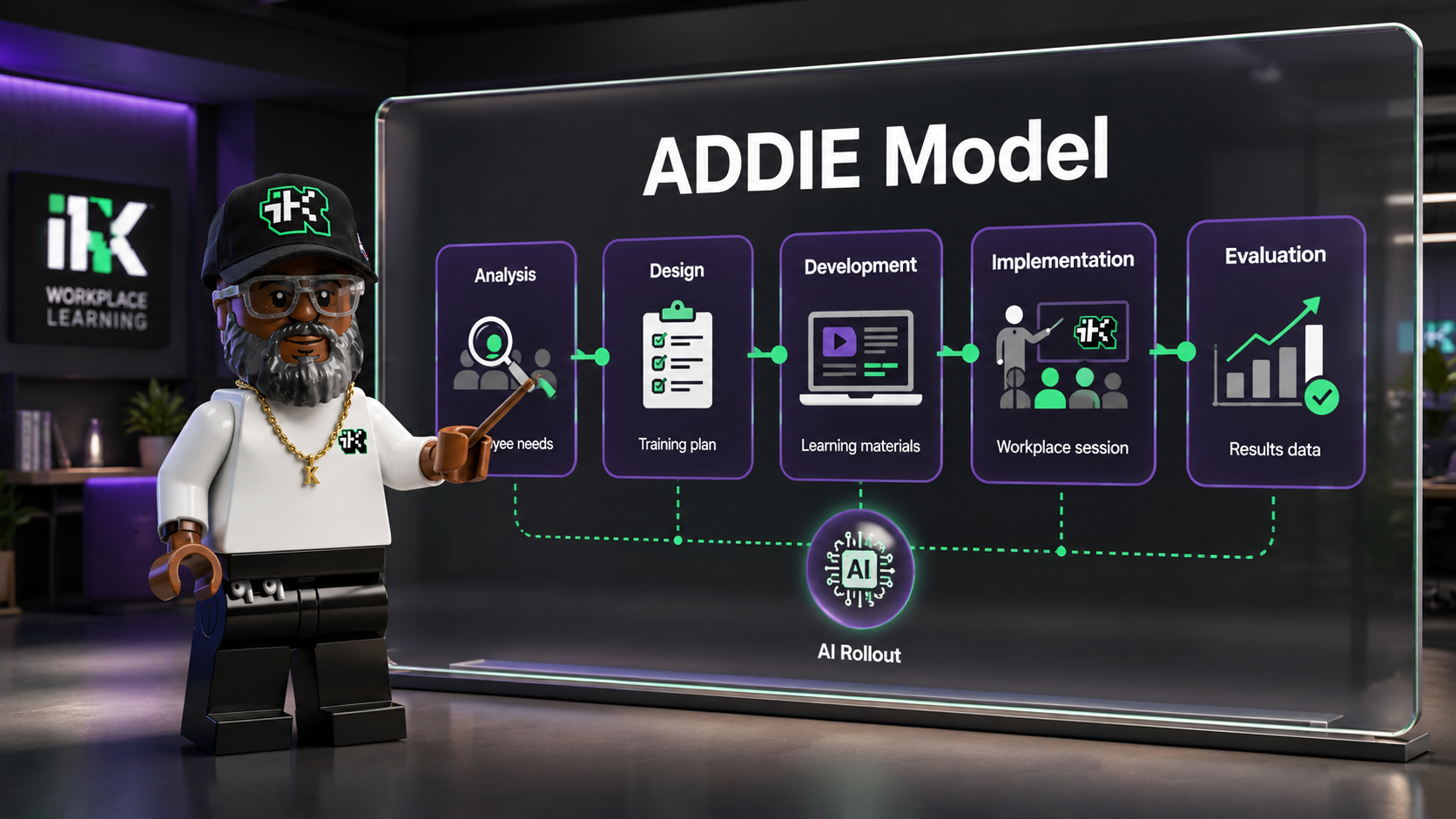

An instructional designer builds the curriculum. A technical trainer delivers it. That split holds no matter which way you say it: technical trainer vs. instructional designer is the same distinction as instructional designer vs. technical trainer. Many organizations hire for one or the other, then find out the gap between "well-designed" and "well-taught" is where their training falls apart. That gap is why a hybrid role exists, and why more teams are hiring for it on purpose.
What an instructional designer does
An instructional designer's job is the curriculum itself, not the room. The Bureau of Labor Statistics groups this work under "training and development specialists," a role that assesses training needs, designs course materials, and evaluates whether a program worked, alongside the delivery side of the job.
In practice, that means:
- Assessing what the gap is before building anything, through surveys, interviews, or conversations with managers
- Structuring the curriculum: what gets taught first, what builds on what, and where a learner practices before moving on
- Building the materials: participant guides, job aids, knowledge checks, and the assessments that show whether the training landed
- Measuring the outcome and revising the design based on what the data shows
The Association for Talent Development treats this as its own discipline. Its Talent Development Capability Model, built from research on more than 3,000 practitioners, lists instructional design as one of 23 distinct capabilities in the field, separate from the capability of delivering training. That separation is deliberate. Someone can be excellent at structuring how a topic should be taught and never once stand in front of a class.
What a technical trainer does
A technical trainer's job is the room, and usually a technical subject inside it. They deliver the training, adjust in real time when half the group is lost, and answer the questions a slide deck can't anticipate.
BLS folds this into the same broad occupation, and the delivery-focused duties it lists are distinct from design: delivering training through a mix of instructional techniques, reviewing and selecting materials from multiple sources, and running the actual sessions, whether that's a live workshop, a virtual class, or hands-on time inside a piece of software.
A technical trainer needs one more thing on top of general training delivery skills: subject-matter depth. Teaching a team how to use Power BI, an ERP system, or a new AI tool requires knowing the software well enough to answer the question that isn't in the curriculum, live, without breaking the room's momentum.
Why organizations end up needing both in one person
Demand for this work is growing on its own. BLS projects 11% growth for training and development specialists from 2024 to 2034, well above the 3% average across all occupations, with about 43,900 openings a year driven largely by organizations needing to upskill people on new technology and new regulatory requirements.
That growth is showing up as a blended job description, not two separate hires. ATD already treats instructional design and training delivery as adjoining capabilities in the same framework rather than separate career tracks. And the job market reflects it: postings for the combined title "instructional designer and trainer" are common enough that ZipRecruiter tracks it as its own search category, with reported pay in the same $65,000 to $120,000 range as either role on its own, not a discount for asking one person to do both jobs.
The reason is practical, not trendy. A curriculum designed by someone who's never taught it live tends to look great on paper and fall apart when a real question derails the pacing. Training delivered by someone who didn't design the curriculum tends to be well-performed but shallow, good energy wrapped around content that wasn't built to stick. One person doing both keeps design and delivery connected: what gets taught and how it gets taught inform each other in real time, especially across a full ADDIE-style build, from analysis through evaluation.
What the hybrid role is called
There isn't one settled title yet, which is part of why this is confusing to hire for. A few versions show up in real postings and real practice.
Instructional Designer/Trainer
The most literal combined title. "Instructional Designer/Trainer" and "Instructional Designer and Trainer" show up directly in job postings for roles that do both, and pay lands in the same range as either role on its own.
Learning Experience Designer
A common alternative to "instructional designer" over the past several years, borrowing from UX design to describe someone who designs the whole learning experience, not just the course content. ATD has written about the shift, though the field is genuinely split on whether it's a real change in the work or a rebrand of the same job.
Technical Trainer & Learning Experience Designer
This is what I use for my own title, because it names both halves plainly: I build the curriculum and I'm the one who delivers it.
None of these titles is more "correct" than another. What matters is whether the person holding it can do both halves of the job, no matter which title is on the door.
What working with a hybrid instructional designer and technical trainer looks like
In practice, it means one person owns every step: identifying the actual skills gap, designing the course, building the materials, delivering it, and measuring whether it worked, instead of handing a curriculum off between a designer and a trainer who never talk to each other.
That's the model behind the Crystal Reports Curriculum Suite, a full course rebuild I did end to end, from gap analysis through delivery, for a reporting tool that few training providers bother with because it's not the flashy AI tool of the month. The same approach applies to Power BI and ERP workflows (Viewpoint Vista, Spectrum): the person who designed the course is the person answering questions live in the room.
If you're trying to decide whether your organization needs this kind of hybrid hire or two separate people, the same questions apply as hiring any training consultant: ask about their process for understanding the gap before they design anything, and ask whether they've delivered what they designed.
If you're weighing that decision for your own team, what I offer starts with that same gap analysis, before any curriculum gets built.
Sources:
bls.gov: Occupational Outlook Handbook, Training and Development Specialists ·
td.org: Talent Development Capability Model ·
ziprecruiter.com: Instructional Designer And Trainer jobs ·
td.org: The Evolution to Learning Experience Design