
ADDIE is a five-step model for building training: Analysis, Design, Development, Implementation, and Evaluation. Instructional designers built it for the U.S. Army in the 1970s, and it's still the most common process behind workplace training today, including the AI training a lot of companies are trying to stand up right now.
Here's where it came from, what each step does, and what it looks like applied to an actual AI rollout.
Where ADDIE came from
Instructional designers at Florida State University's Center for Educational Technology developed ADDIE for the U.S. Army in the mid-1970s, building on an earlier process the Air Force had used called the Five Step Approach. It worked well enough that the other military branches adopted it, and from there it spread into corporate and higher-education training, where it's stayed for 50 years.
The first version was strictly linear: finish Analysis, then move to Design, then Development, and so on, in order. A mid-1980s update loosened that up, letting instructional designers move back and forth between steps instead of only moving in one direction, which better matches how training gets built.
The five steps, applied to an AI training rollout
Say a company decides to roll out a generative AI tool, meaning software like Claude or ChatGPT that produces new text, image, or code output from a written instruction, to its whole staff. Here's what each ADDIE step looks like for that project.
- Analysis: figure out who needs training and what they already know, before building anything. Gallup's Q2 2026 workforce survey found 47% of U.S. employees say their organization has rolled out AI tools, and one in five say they aren't sure. That uncertainty is exactly what the Analysis step exists to clear up. Skip it, and you build a training session for a team that doesn't exist.
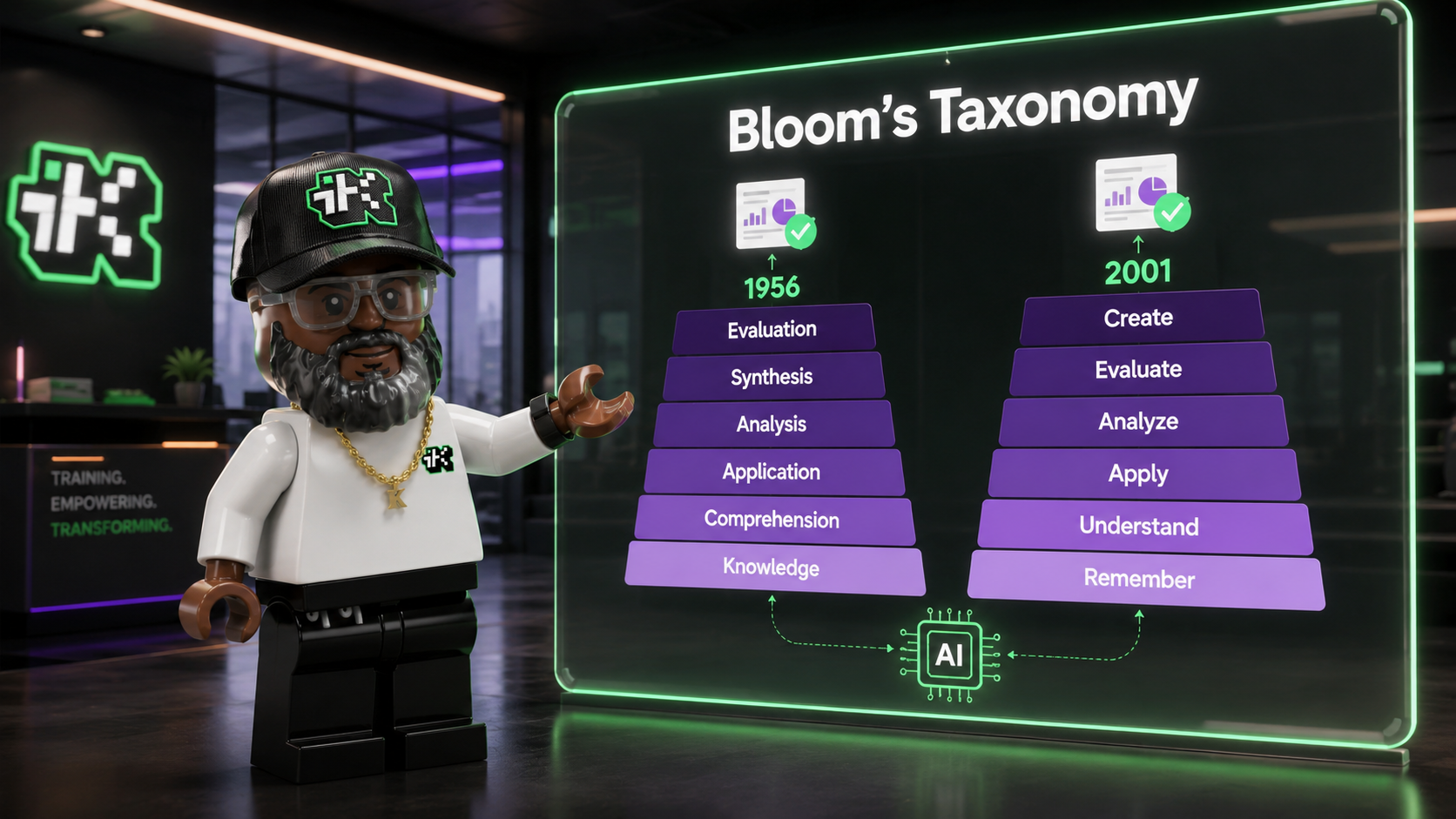
- Design: decide what "done" looks like and plan the structure of the training around it. This is where a model like Bloom's Taxonomy earns its place: deciding whether the team needs to reach "remember this tool exists" or all the way to "create a workflow with it" changes everything else you build.
- Development: build the actual materials, the slides, the practice exercises, the sandbox account where people test real prompts on real work.
- Implementation: deliver the training. This step includes the logistics that get skipped when people rush from Development straight to "send the calendar invite": who's facilitating, what device or account each person needs working before they walk in, and what happens for the person who misses the session.
- Evaluation: check whether the training changed what people do at work, not just whether they liked the session. I've written about what that measurement looks like in practice; the short version is that attendance and a good exit survey predict almost nothing about whether a skill is still in use a month later.
The fair complaint about ADDIE, and why it still holds up
The most common critique of ADDIE is that five sequential-sounding steps feel too slow for how fast AI tools change. A tool your Development team built training around in January can get a new interface by March.
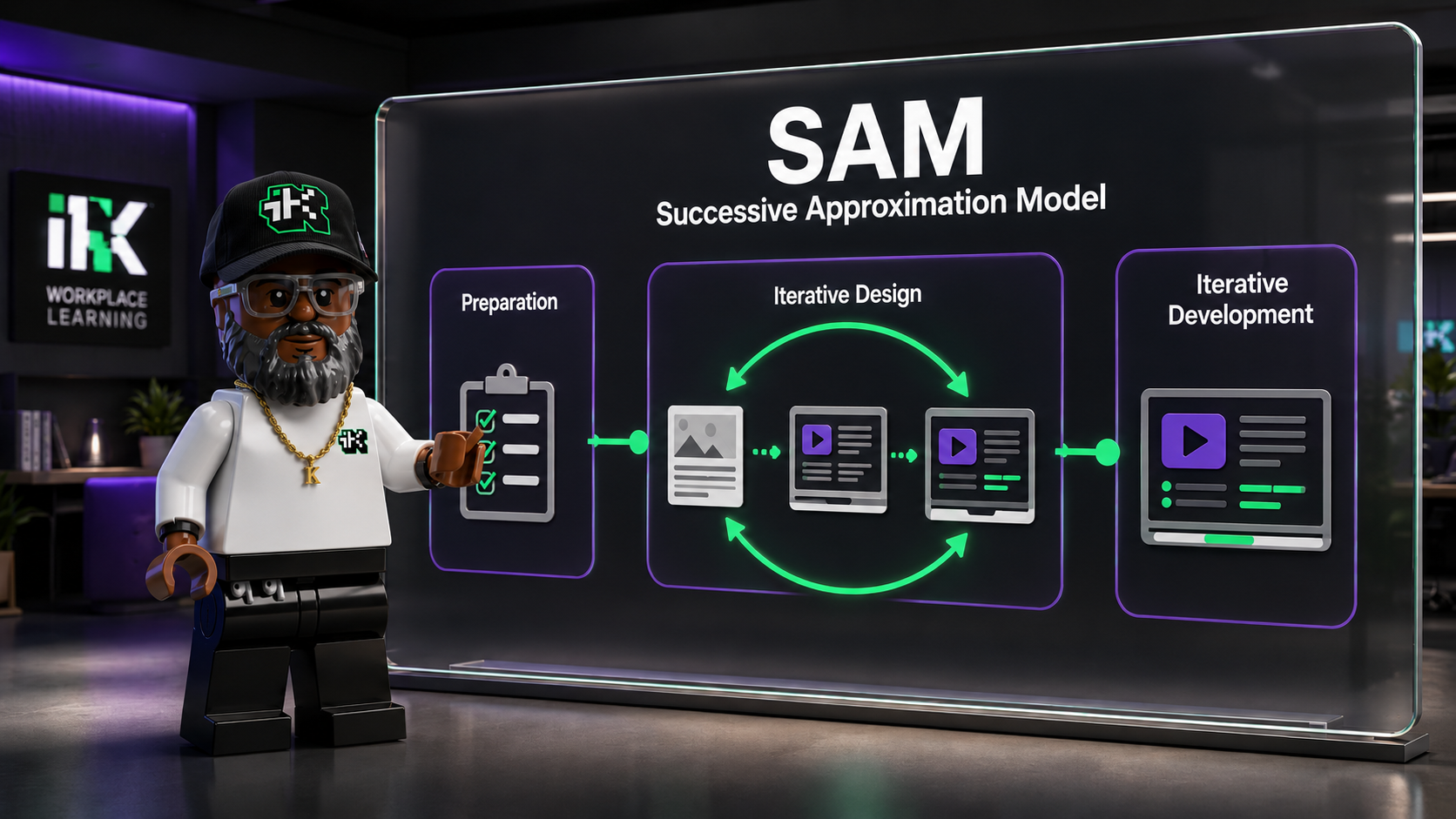
That critique lands better against a training team following the original 1975 version than the one instructional designers use now. The Association for Talent Development's own breakdown of the model describes it as iterative in practice: designers cycle back to Analysis or Design mid-project instead of treating each step as a one-time gate. Used that way, ADDIE works as a checklist you move through quickly and revisit when something changes, matching the pace AI training needs.
How to use ADDIE if you're the one rolling out AI training
Start with Analysis even when the pressure is to skip straight to building slides. Twenty minutes of finding out what your team already knows saves hours of building the wrong session.
Use the Design step to set one clear target using something like Bloom's Taxonomy, so Development has an actual goal to build toward instead of a general topic.
Treat Evaluation as an ongoing check, not a survey at the end. Revisit it a month after the training and see what's still in use.
That's the process behind the AI and digital literacy training programs I build for teams and organizations. If your company is planning an AI rollout and wants help structuring the training end to end, the free 15-minute call is the place to start. You can also see the workshops and programs I run in the What I Offer section.
Sources
- Don Clark, "History of the ADDIE Model": http://www.nwlink.com/~donclark/history_isd/addie.html
- Association for Talent Development, "The ADDIE Model for Instructional Design Explained": https://www.td.org/content/newsletter/all-about-addie
- Gallup, "Organizational AI Adoption Jumps Six Points" (July 20, 2026): https://www.gallup.com/workplace/712736/organizational-adoption-jumps-six-points.aspx
- McKinsey, "Superagency in the Workplace": https://www.mckinsey.com/capabilities/tech-and-ai/our-insights/superagency-in-the-workplace-empowering-people-to-unlock-ais-full-potential-at-work
Notes marked as my process or professional opinion are exactly that, not external data.