
SAM, short for Successive Approximation Model, is an instructional design model built around short, repeating cycles instead of one long sequence. Michael Allen, founder of Allen Interactions, introduced it as a faster alternative to ADDIE. Where ADDIE moves through five steps once, SAM moves through small versions of the training multiple times, testing and fixing each one before it grows.
Here's how the model works, and what it looks like applied to an AI training rollout.
The three phases of SAM
SAM runs on three phases, and the middle two are built to repeat:
- Preparation: gather background information and set the real goal for the training, then run a Savvy Start, a kickoff session where stakeholders and a few future learners sketch a rough version of the training together in the room instead of receiving a written plan afterward.
- Iterative Design: a short, repeating loop of design, prototype, and review. Each pass produces a rough working version, not a polished one, and gets tested before the next pass begins.
- Iterative Development: a repeating loop of build, test, and implement, continuing until the training is ready for a full rollout.
How SAM differs from ADDIE
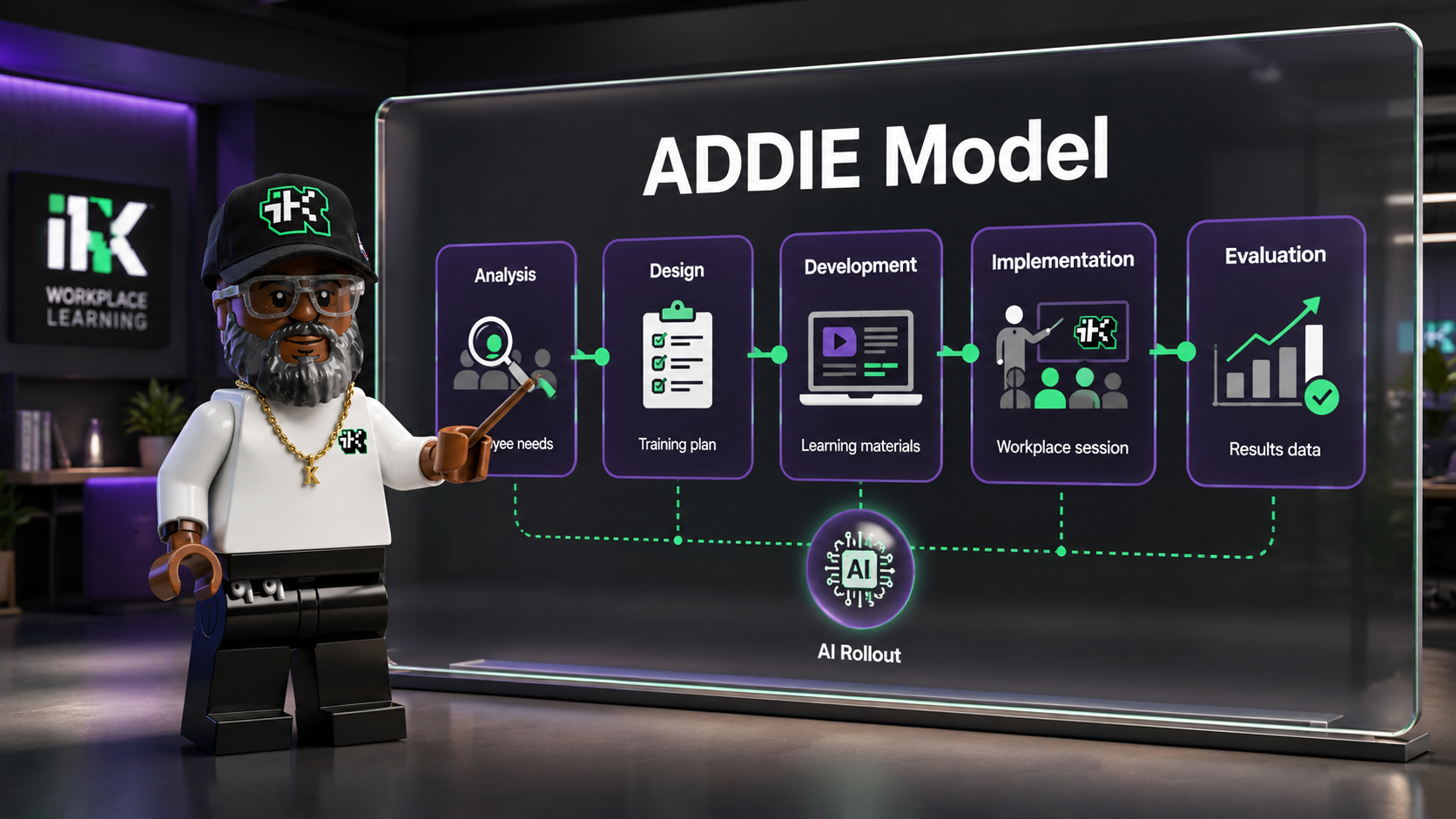
ADDIE finishes Analysis before Design begins, and finishes Design before Development begins. Each step is a gate the project passes through once.
SAM skips the long upfront analysis and gets a rough prototype in front of real learners almost immediately, then revises based on what breaks. The tradeoff: ADDIE's front-loaded analysis catches some problems before any work starts, while SAM catches problems only after something exists to react to, which means the first version is expected to be wrong in places.
SAM applied to an AI training rollout
Say a company wants to train its customer support team to use a generative AI tool, meaning software like Claude or ChatGPT that produces new text, image, or code output from a written instruction, for drafting response emails.
Preparation and Savvy Start: the training lead pulls in two team leads and three support reps for a 90-minute session. Instead of presenting a plan, they sketch on a whiteboard what a good AI-assisted response looks like versus a bad one, using real past tickets.
Iterative Design, loop one: the team builds a single rough exercise: draft a response to one real ticket using the tool, then compare it against what a rep sent. They test it with three reps. Two of them get stuck on how to phrase the prompt, meaning the instructions or question you type in to get a response.
Iterative Design, loop two: the exercise gets a starter prompt template added, based directly on where people got stuck. Tested again with a different small group.
Iterative Development: once the exercise holds up, the team builds the full session: the ticket examples, the prompt templates, a short guide on checking AI output for errors before sending. They pilot it with one team, fix what breaks, then roll it out to the rest.
Why an iterative model fits AI training specifically
McKinsey's "Superagency in the Workplace" report found 92% of companies plan to increase AI investment over the next few years, while only 1% of leaders describe their company's AI use as fully mature. That gap points to a fast-moving target: the tool your team trains on today can look different in a few months.
A model that tests a rough version against real people early, the way SAM does, catches a confusing prompt or an outdated example before it's built into forty slides. A model that finishes analysis first and builds once, the way ADDIE's original version does, risks finishing a polished training built around a tool interface that already changed.
That case is strongest when the target keeps shifting fast. For training with a stable goal and less week-to-week change, ADDIE's front-loaded analysis still holds up, and ADDIE's own iterative revision is described in the ADDIE post.
How to use SAM if you're building AI training
Start with a Savvy Start instead of a written proposal. Get two or three people who'll sit through the training in the room and sketch the first version together.
Build one small piece and test it before building the rest. If a single exercise confuses your first three testers, a full course built on the same idea will confuse everyone else too.
Expect the first version to be wrong somewhere. The model is built around catching that early, not avoiding it.
That's the kind of design process behind the AI and digital literacy training programs I build for teams and organizations. If your company wants help structuring an AI rollout this way, the free 15-minute call is the place to start. You can also see the workshops and programs I run in the What I Offer section.
Sources
- Allen Interactions, "Rapid Instructional Design and Development with SAM": https://learn.alleninteractions.com/allen-interactions-rapid-instructional-design-and-development-with-sam
- McKinsey, "Superagency in the Workplace": https://www.mckinsey.com/capabilities/tech-and-ai/our-insights/superagency-in-the-workplace-empowering-people-to-unlock-ais-full-potential-at-work
Notes marked as my process or professional opinion are exactly that, not external data.