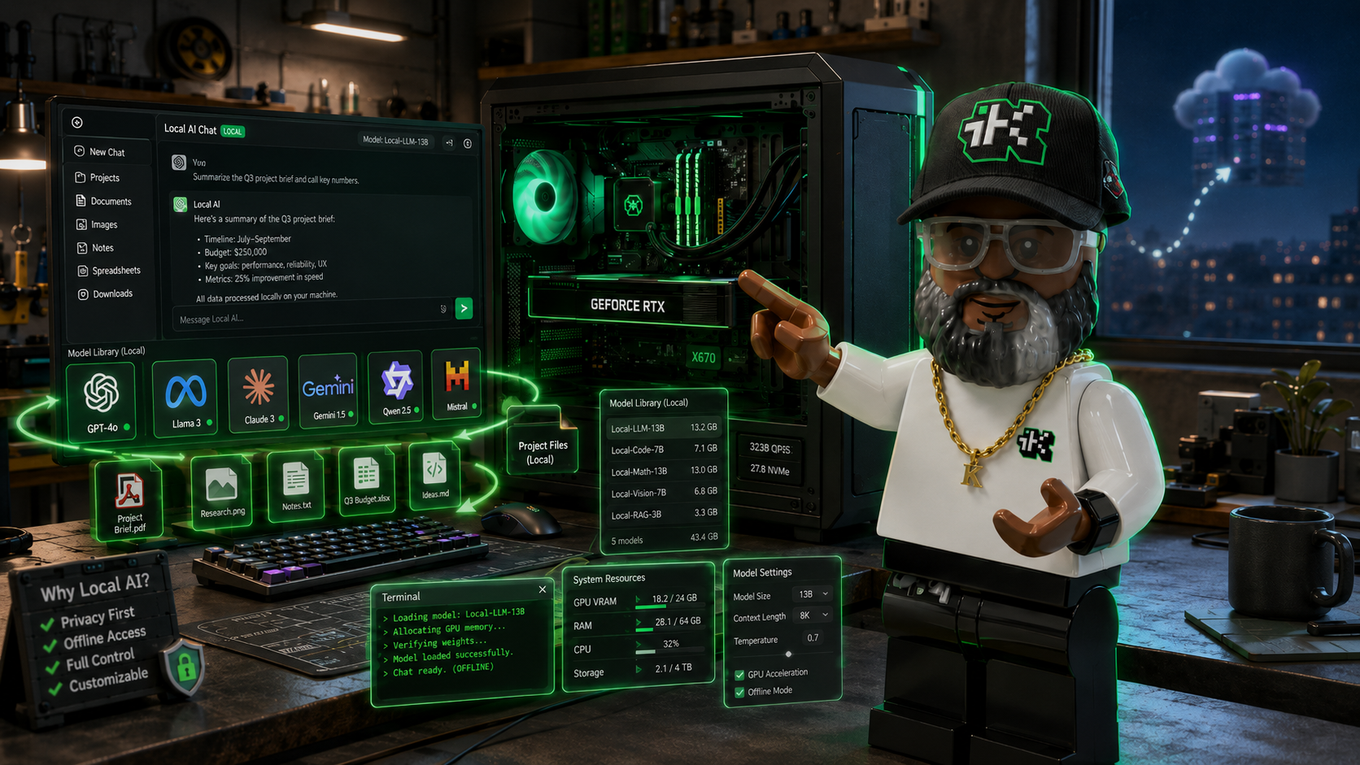

A vector database stores information as embeddings, numerical representations of meaning generated by an AI model, instead of rows and columns. That lets it search by what content means rather than the exact words it uses. Feed it your own writing, and it can retrieve the passages closest in meaning to whatever you're about to write next.
Common explainers of vector databases lead with chatbot use cases, like a support bot pulling the right help article. That's real. Point the same kind of database at your own transcripts, blog posts, or old captions, and you've got the raw material for AI drafts that sound like you.
The quick answer
- What it is: a database built to store embeddings, the numeric fingerprints an AI model generates for a piece of text, instead of the rows and columns a normal database uses.
- How it searches: by similarity, finding content close in meaning to a query, instead of matching exact keywords.
- What you'd put in yours: newsletters, blog posts, video transcripts, social captions, any real writing you've already produced.
- What you get back: when you ask AI to draft something new, it retrieves your closest real writing on that topic first and uses it as reference before it generates anything.
- The technique this is: retrieval-augmented generation, or RAG, pulling relevant real content into an AI's context before it responds.
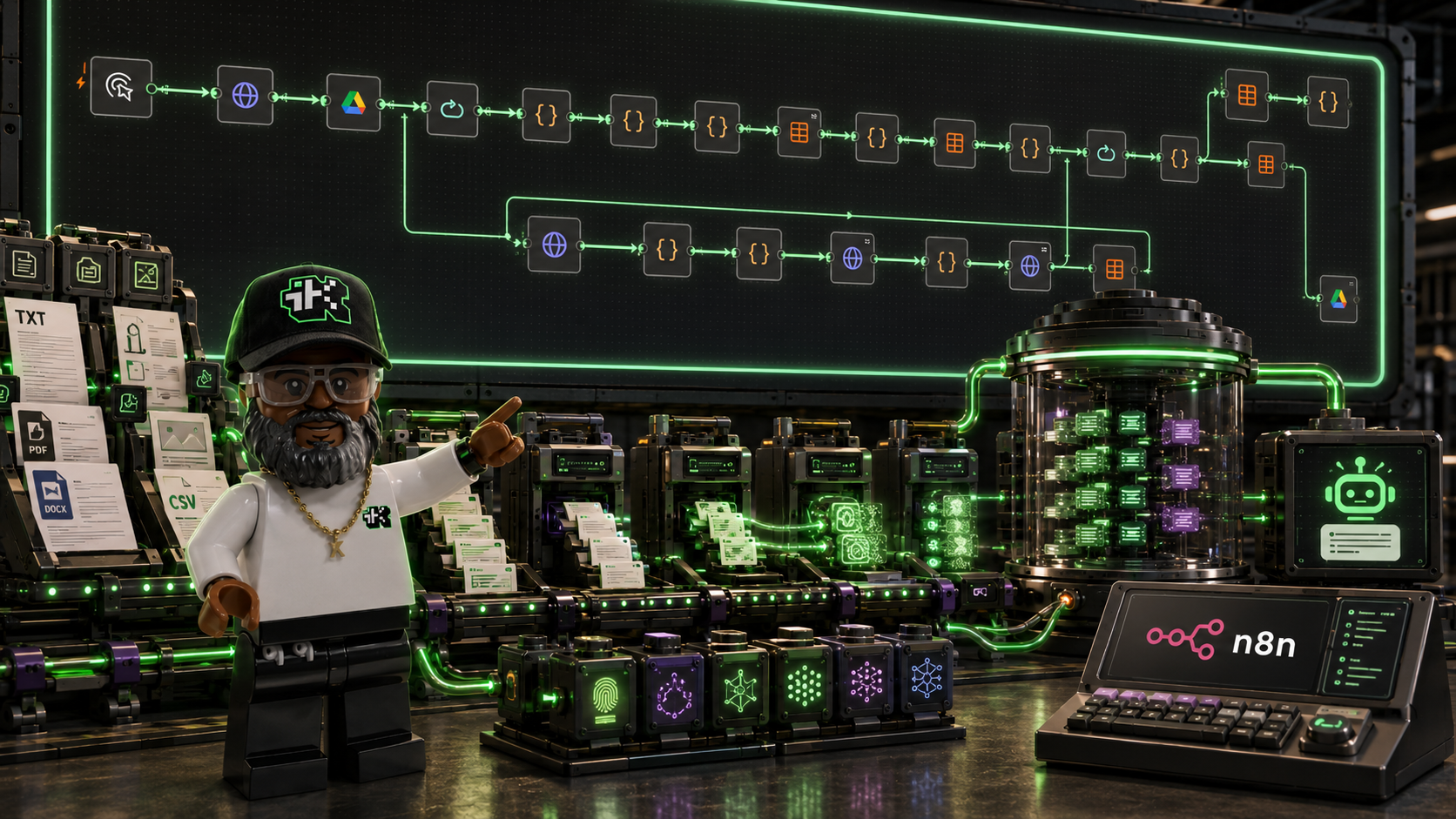
- How to build it without writing an app: a tool like n8n can run the whole pipeline, chunking your files, generating embeddings, and storing them, with no code.
How it's different from a regular database
A normal database stores structured data in rows and columns and finds records by an exact match: a customer ID, an email address, a date. A vector database stores embeddings instead. Two sentences with similar meaning end up with numerically close embeddings, even if they don't share a single word.
That's what makes similarity search possible. Query a vector database and it doesn't look for your exact phrase. It looks for the stored content whose embedding sits closest to your query's embedding in that numerical space, using a distance measure like cosine similarity. Pinecone's own explainer on this puts it plainly: the database is built to manage and search embeddings at scale, something a standard database was never designed to do.
How your own writing becomes something AI can draw from
The setup is the same regardless of what you're feeding it. Break your writing into chunks, small enough to stay focused on one idea. Run each chunk through an embedding model, which turns it into that list of numbers. Store the embedding and the original text together in the vector database.
From there, retrieval happens automatically. When you ask an AI tool to draft a caption, an email, or a blog intro, your request gets converted into an embedding too, then compared against everything stored. The closest matches, actual sentences and paragraphs you wrote on a similar topic, get pulled and handed to the AI as reference before it generates a single word of the new draft.
That pattern, retrieving real content and feeding it to an AI before it responds, is called retrieval-augmented generation, or RAG. It's the same mechanism behind AI tools that answer questions from a company's own documents. Here, the documents are just your own past writing.
Retrieval isn't the same as fine-tuning
There are two different ways to get an AI to sound like a specific person. Fine-tuning retrains the model itself on that person's writing, changing how it behaves at a deeper level. Retrieval, what a vector database does, never touches the model. It hands the model real examples at the moment it's writing something, closer to giving a ghostwriter your last ten emails before they draft the eleventh than teaching them to think the way you do.
Databricks lays out the distinction well: fine-tuning changes the model, retrieval changes what the model sees. For someone trying to get AI-assisted writing that sounds like them, without a training pipeline or a GPU, retrieval is the option within reach: files, an embedding model, and somewhere to store the results.
Is it worth setting up
If you've got a backlog of newsletters, transcripts, or captions and want AI drafts that start closer to your real voice instead of generic AI phrasing, yes. Quality depends on how much real writing you feed it and how well it's chunked. The n8n build that turns your files into a working vector database covers both.
If n8n itself is still new to you, this is the basic intro. And if you're weighing something similar for a team or organization, we can have a quick conversation.
Sources:
pinecone.io: what is a vector database ·
pinecone.io: what is RAG ·
aws.amazon.com: what is a vector database ·
databricks.com: RAG vs. fine-tuning