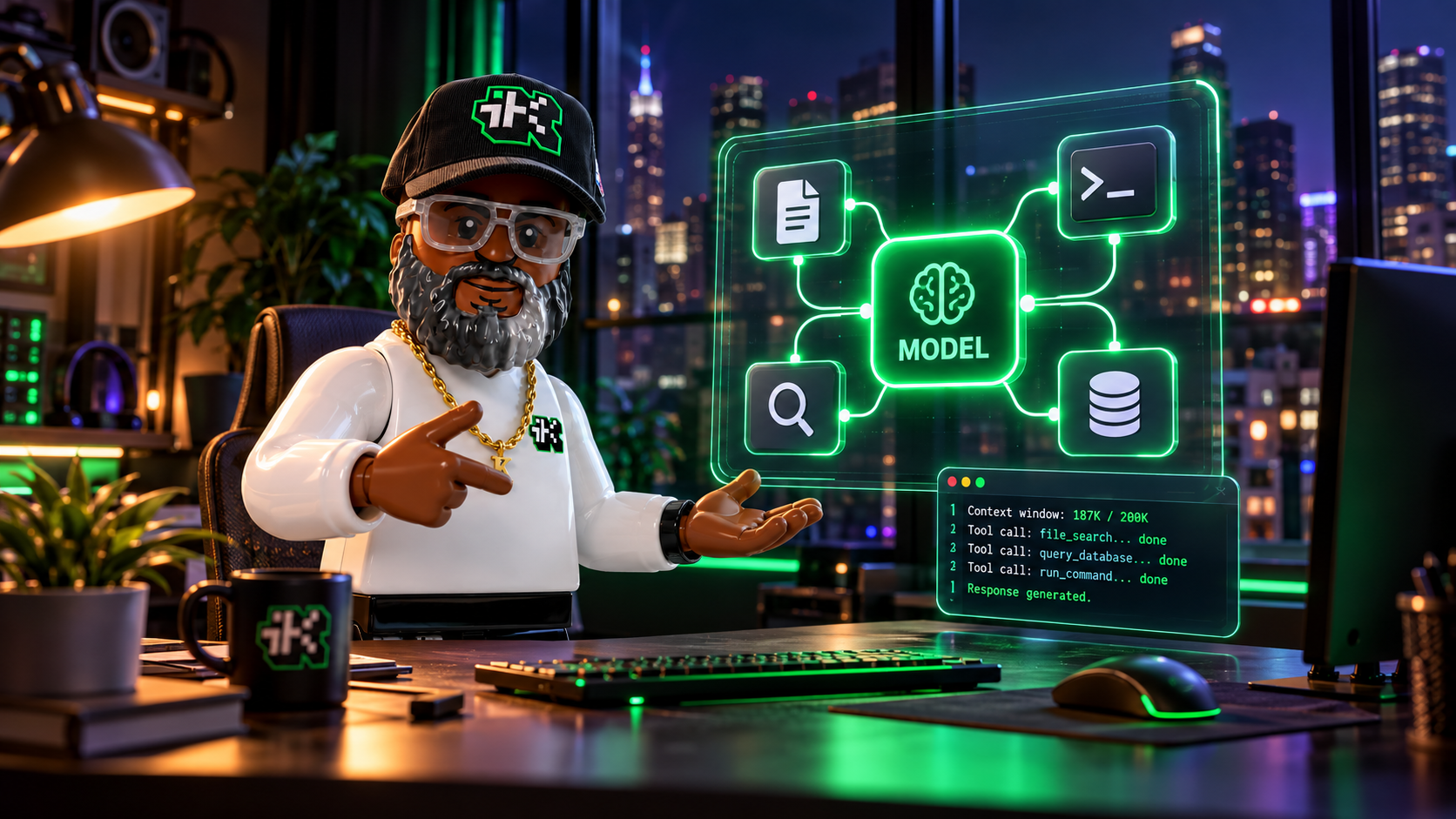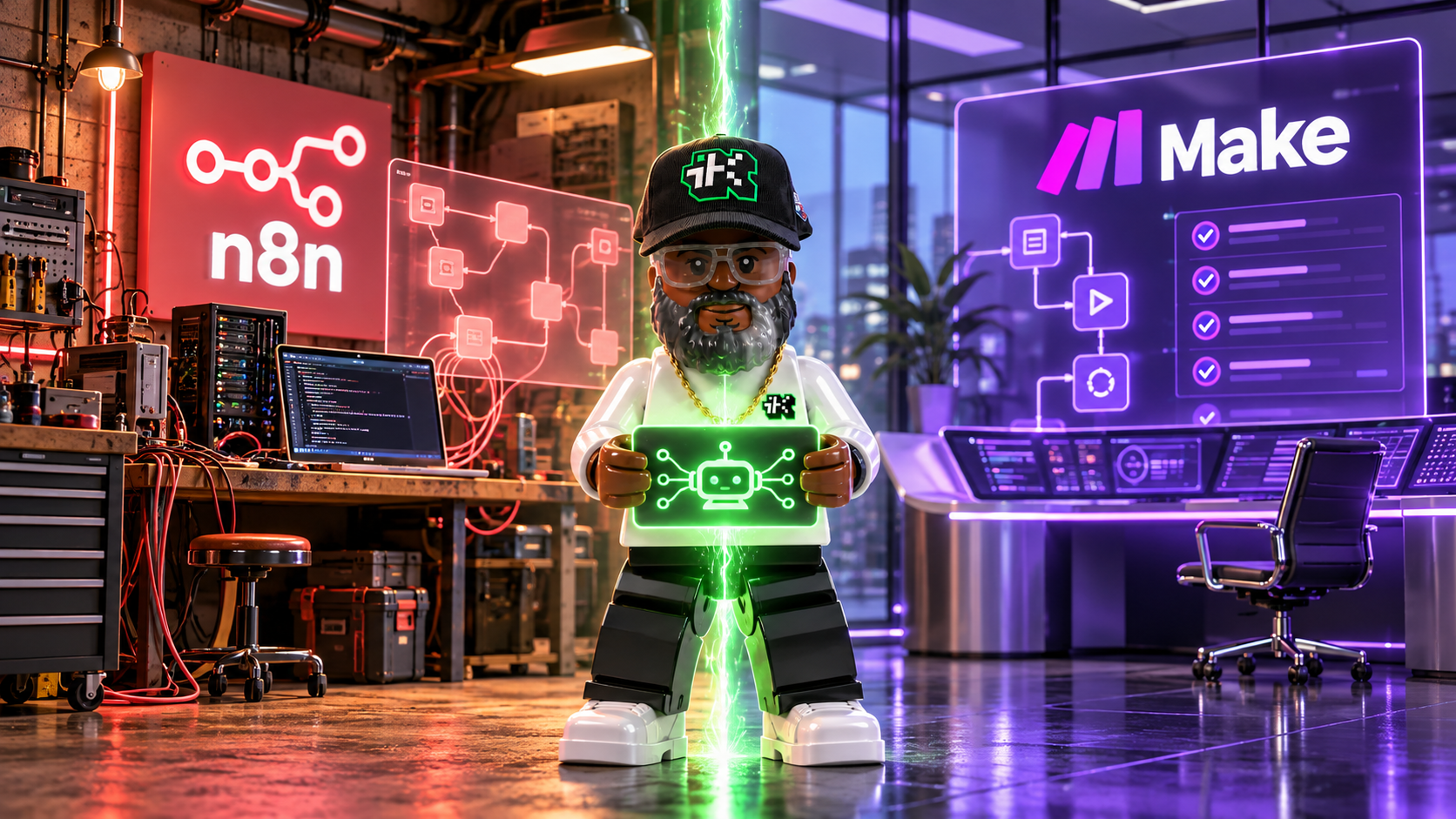

Automation runs the steps you gave it, in the order you gave them, every time. An AI agent decides its own steps, using a language model (the system behind tools like Claude or ChatGPT, trained to predict text and increasingly to plan and act on it) to figure out what to do next based on what it's looking at right now. That's the entire split. Everything else below is a variation on it.
It matters because the two get used interchangeably in marketing copy for tools that are, underneath, doing very different things. Knowing which one you're building, or buying, changes what you should expect from it: how much it costs to run, and how it fails.
What counts as automation
Automation is a fixed sequence: trigger, then steps, in that order, every run. You build the logic once, by hand, and the tool follows it exactly. A Zapier "zap" that watches for a new form submission and adds a row to a spreadsheet is automation. An n8n (a workflow automation tool you can self-host) routine that checks an inventory count every morning and emails you when it drops below 10 is automation.
The logic is deterministic, meaning the exact same input produces the exact same output, every single run. If the form has a field automation doesn't expect, or the inventory feed returns an error instead of a number, the workflow usually stops or does the wrong thing. It has no way to reason about what changed. Deterministic behavior like that is exactly why automation gets trusted for billing, compliance steps, and anything where getting the same result every time matters more than handling something unexpected well.
What makes something an AI agent
IBM defines an AI agent as "a system that autonomously performs tasks by designing workflows with available tools," rather than following a workflow a person already designed by hand.
Give it a goal like "find this week's support tickets that mention refunds and summarize them," and it decides how: search the ticket system, read a batch, decide which ones qualify, write the summary, maybe ask a follow-up question if the data's ambiguous. Change the input and the agent adjusts instead of breaking. McKinsey draws the same line from the automation side: rule-based systems "tend to break down when they face situations the rules' designers didn't anticipate." A model trained on far more scenarios than any one person could write rules for adjusts instead of stopping.
That adjustment is also the tradeoff. More on that below.
The model doing the reasoning is only half of what makes an agent work. The software wrapped around it that lets it act, called an agent harness, is what turns a model that can only produce text into something that can use tools and finish a task.
Where the line gets blurry
n8n added an AI Agent node to a tool that used to be pure fixed-step automation. Zapier has done the same. That's the state of things now: you don't have to pick one architecture for an entire process.
A weekly report routine can pull data on a fixed schedule (automation), hand the paragraph-writing step to a model (agent-like reasoning for just that one step), then post the result to Slack on a fixed trigger (automation again). In practice, many production workflows end up as this kind of mix rather than a pure pick of one over the other.
Which one fits the task in front of you
Reach for automation when the steps are known and don't change, the inputs are consistent and structured, and you need the exact same result every time: billing runs, data entry, scheduled reports.
Reach for an agent when the task needs judgment on input that varies, the steps depend on what gets found along the way, and you're willing to trade some predictability for handling cases you didn't think to write a rule for.
The tradeoffs that come with each
Automation is cheap and fast to run since it does no reasoning, it just executes. It's also brittle: change the input format and it breaks instead of adjusting. Debugging a broken zap or workflow is usually quick because the logic is visible and linear, the same way a step-by-step n8n automation tutorial shows every step in order.
Agents cost more per run, since each step can mean another call to a model, and those calls aren't free. They're also less predictable: ask an agent to do the same task twice and you may get two different paths to the same answer, or two different answers. That's the price of the adjustment that makes them useful in the first place. Debugging an agent means figuring out why it made the choice it made, a different and harder kind of troubleshooting than reading a broken automation's fixed logic. If you're weighing specific agent-building tools against each other, the n8n vs Make comparison for AI agents gets into how that plays out in practice.
Neither replaces the other. An agent that reasons through a task a fixed workflow could handle in one deterministic step costs more and runs slower for no reason. A fixed workflow that can't adjust when the input changes fails the moment reality stops matching what it was built for. Pick based on which failure mode you can live with on this specific task: brittleness under a fixed workflow, or unpredictability under an agent.
Sources:
mckinsey.com/featured-insights/mckinsey-explainers/what-is-an-ai-agent ·
ibm.com/think/topics/ai-agents