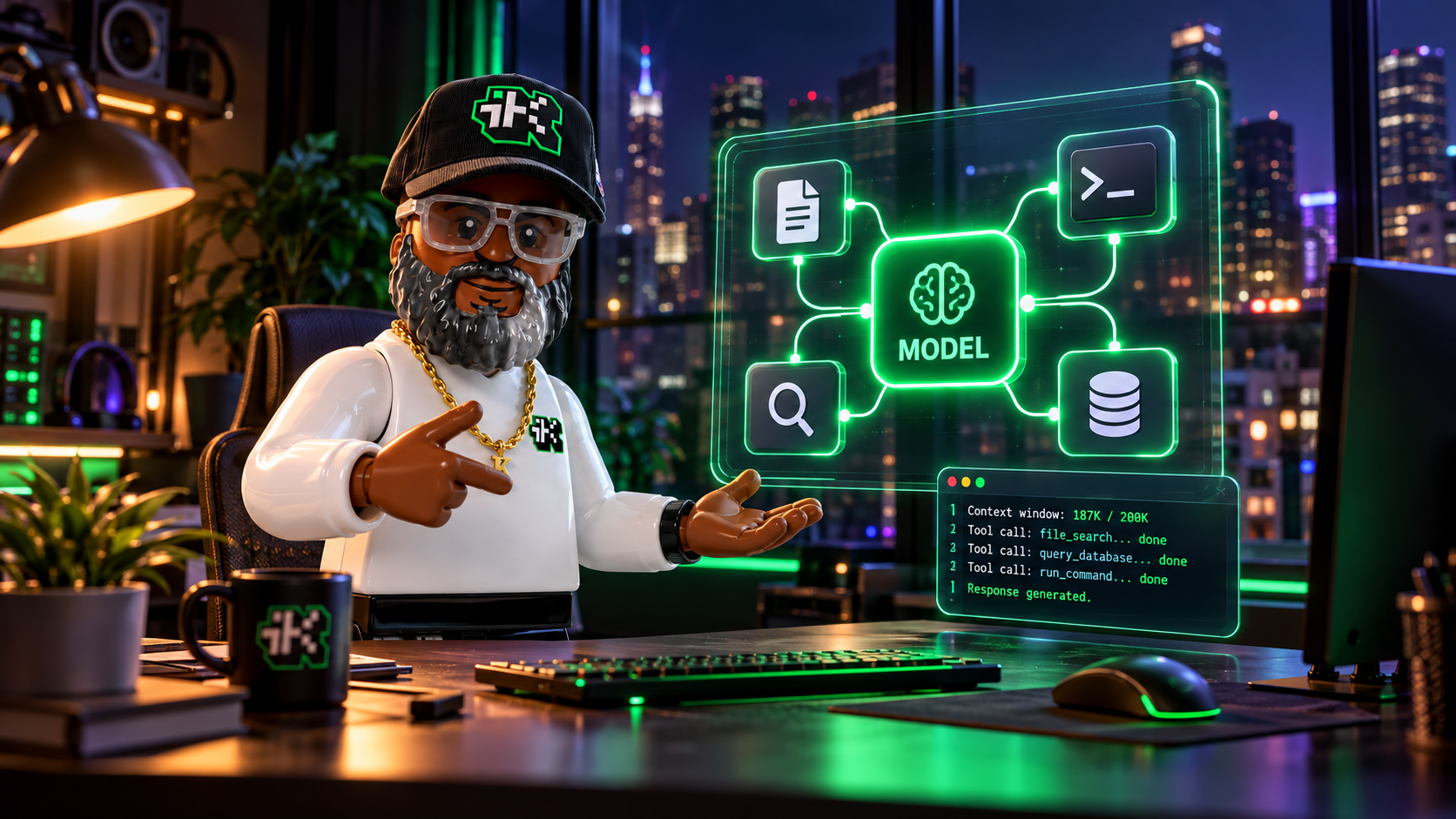

AI terms like LLM, MCP and agent are names for the different parts of an AI system. Some name the model that writes the text. Some name the connections that let it reach your apps and files. Others name the setups that let AI take action on its own.
Below are 20 of the AI terms and acronyms you’re likely to hear, split into four short tables. Each row says what the term is and what it’s for. Where there’s a deeper post on the term, the row links to it.
The tables build on each other, so if you’re new to this, read them in order. If you’re in L&D, HR or training, Tables 2 and 4 cover a lot of what comes up in vendor demos and IT conversations.
The model itself
These five terms describe the AI model and how it reads and writes text.
| Term | What it is | What it’s for |
|---|---|---|
| LLM (large language model) | An AI system trained on a huge amount of text to predict what comes next in a sentence. That one skill is how it writes, summarizes and answers questions. | The engine inside ChatGPT, Claude and Gemini. When people say “the model,” they mean the LLM. Large vs. small language models covers the size difference. |
| GPT (generative pre-trained transformer) | A type of LLM. Generative means it creates new text, pre-trained means it learned from a large body of text before anyone used it, and transformer is the design it’s built on. | OpenAI uses GPT in its model names. ChatGPT is the app, and GPT models run inside it. ChatGPT models explained breaks down the current lineup. |
| Token | A small chunk of text a model reads and writes in. OpenAI’s rule of thumb is that 1 token is about 4 characters, or three-quarters of a word, in English. | How usage limits and API bills get counted. It’s also the unit for measuring how much a model can hold at once. |
| Context window | The amount of text, measured in tokens, a model can keep in view at one time. That includes your messages, any files you add and its own replies. | Explains why a very long chat or a giant document can make the AI lose track of details from earlier on. |
| Hallucination | When an AI states something false with full confidence, like a made-up statistic or a citation to a study that doesn’t exist. | A reminder to check facts, numbers and sources before you use AI output in anything that matters. |
How AI connects to your other stuff
These terms come up once AI starts working with other software, your files and your apps.
| Term | What it is | What it’s for |
|---|---|---|
| API (application programming interface) | A set of rules that lets one piece of software send requests to another and get answers back, with no chat window in between. | How apps, websites and automation tools like n8n use an AI model behind the scenes. Access usually runs through an API key, and the bill is counted in tokens. |
| CLI (command line interface) | A text-only way to use a program by typing commands into a terminal window instead of clicking buttons. | Where AI coding tools like Claude Code, OpenAI’s Codex CLI and Google’s Gemini CLI run, so the AI can work directly with files on your computer. |
| MCP (Model Context Protocol) | An open standard for connecting AI apps to outside tools and data. Anthropic introduced it in November 2024 and donated it to the Linux Foundation’s Agentic AI Foundation in December 2025. | Lets an assistant read from or act in apps like Google Drive, Slack or your calendar, so you stop copying and pasting between them. What are MCPs walks through adding one. |
| RAG (retrieval-augmented generation) | A setup where the AI searches a set of documents first, then writes its answer from what it found. | Company chatbots that answer from your own policies, handbooks or help articles instead of general training alone. It often runs on a vector database. |
| Connectors, plugins and skills | Add-ons that extend an AI assistant. A connector links it to one app, a skill is a saved set of instructions for a specific job, and a plugin packages several add-ons together. | Teaching your assistant your formats, tools and workflows once instead of explaining them every time. Names vary by product. What are Claude Skills shows one version up close. |
When AI starts doing the work
These terms describe AI that takes action and works through a task step by step.
| Term | What it is | What it’s for |
|---|---|---|
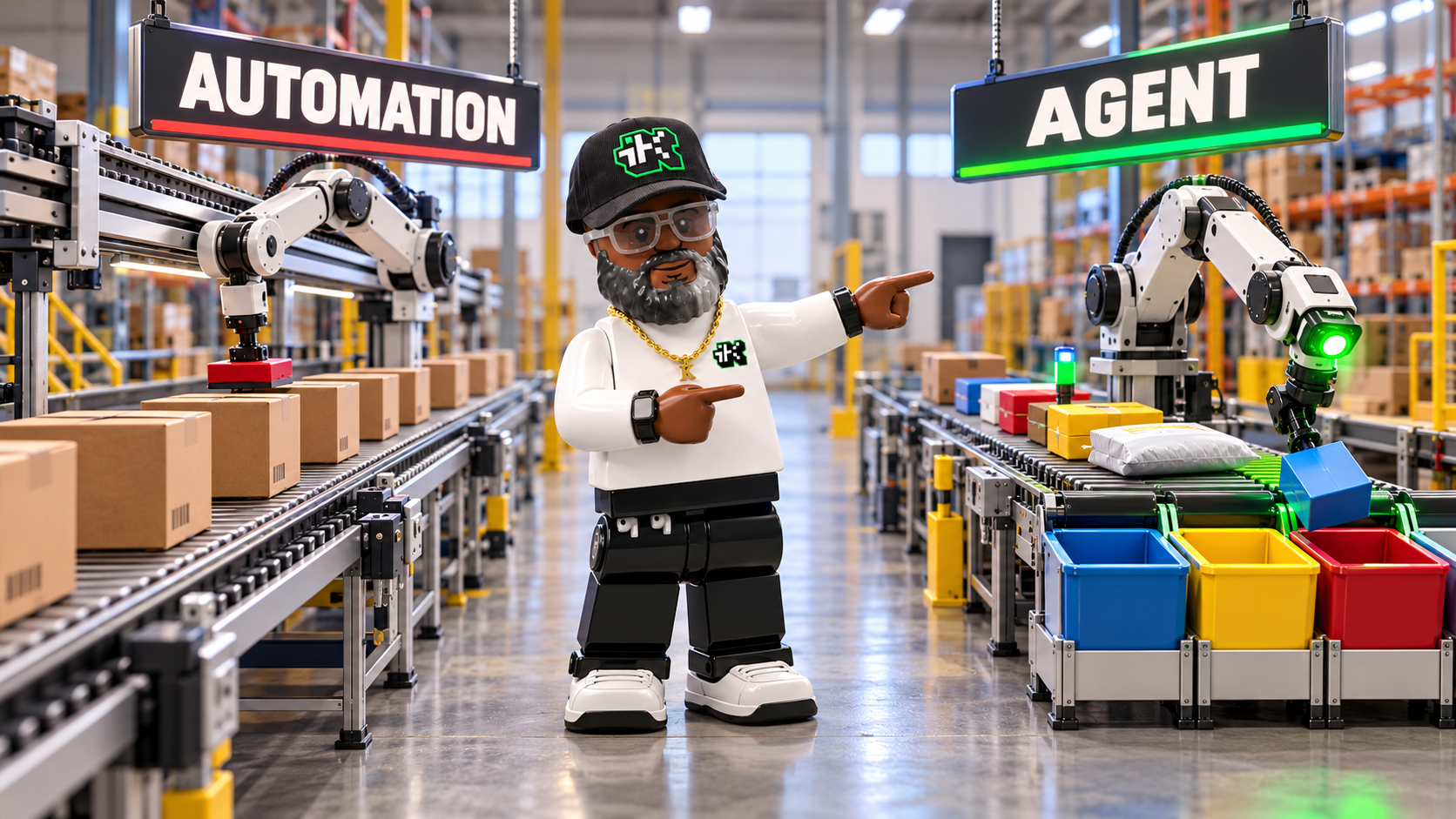
| Agent | An AI system that works toward a goal by choosing its own next steps, using tools, checking the results and continuing until the job is done. | Multi-step work like researching a topic, editing a folder of files or filling in a spreadsheet. AI agent vs. automation explains how an agent differs from a fixed workflow. |
| Subagent (also sub-agent) | A helper agent that a main agent hands one piece of a bigger job to. It works in its own context window and reports back when it’s finished. | Splitting a big job so parts run side by side and the main agent’s context stays clear. Each subagent uses its own tokens, so how you set them up affects cost. |
| Harness | The software wrapped around a model that hands it tools, tracks its progress across steps and sets the rules it works under. | Turning a model that can only write text into an agent that can act. Claude Code and the AI Agent node in n8n are both harnesses. What is an AI harness goes deeper. |
| Tool use (also called function calling) | The model’s ability to trigger an action outside itself, like running a web search, reading a file or sending an email, and then use what comes back. | The gap between an AI that tells you how to do something and one that does it. Function calling is the developer term for the same idea. |
| Human-in-the-loop | A setup where a person reviews or approves certain steps before the AI moves ahead. | Keeping people in charge of anything that’s hard to undo, like sending an email, spending money or deleting files. |
Words you’ll hear in meetings and the news
These five show up in vendor pitches, leadership updates and headlines about AI.
| Term | What it is | What it’s for |
|---|---|---|
| AGI (artificial general intelligence) | A hypothetical AI that could handle any thinking task a person can, across every subject. There’s no agreed definition and no agreed test for it. | Mostly appears in company mission statements, forecasts and news coverage. When it comes up in a vendor pitch, ask what the product can do today. |
| Multimodal | A model that can take in or produce more than one kind of content, such as text, images, audio and video. | Snapping a photo of a whiteboard and asking for clean notes, or talking to an assistant out loud and hearing it answer. |
| Reasoning model (also called a thinking model) | A model that works through a problem step by step before it answers. That extra work takes more time and uses more tokens. | Math, planning, coding and multi-step analysis. Many tools let you pick an effort level, such as low, medium or high. |
| Fine-tuning | Extra training on top of an existing model, using your own examples, so it gets better at one specific job or style. | Organizations that need consistent output on a narrow task. For many workplace needs, clear instructions or RAG get there for less money and effort. |
| Open-weight vs. closed | Open-weight models publish their weights, the numbers that store everything a model learned, so anyone can download and run them. Closed models keep the weights on the company’s own servers. | Deciding where your data goes and who controls the model. Llama, DeepSeek and OpenAI’s gpt-oss are open-weight. Claude and Gemini are closed. Open source vs. closed AI models covers the tradeoffs. |
Where to find the rest
These 20 are a starting point. The full AI glossary on the Resources page has 50 terms, from embeddings and inference to system prompts and vibe coding, sorted A to Z and searchable.
When a new term shows up in a meeting or a release note, check where it fits in these four groups first. Knowing whether it’s part of the model, a connection, an agent setup or a big-picture idea tells you a lot before you’ve read a single definition.
Stay curious, stay learning.
Sources
- Understanding and counting tokens from OpenAI Help Center
- Donating the Model Context Protocol and establishing the Agentic AI Foundation from Anthropic, December 9, 2025
- Introducing gpt-oss from OpenAI, August 5, 2025